Elite2Way
CH 03Radio 3 of 3Flagship

Three radio networks. One device. Nobody carries two radios.

A hybrid handheld that talks on Push-to-Talk over Cellular (PoC), on DMR digital, and on analog — so one radio covers wide-area work, encrypted on-site traffic, and the fleet you already own. Runs Android, with a touchscreen, cameras, and GPS.

Compare all three models
Elite2Way MAX Hybrid Radio — view 1

E2W MAX Hybrid

$599.00per radio

The flagship. Cellular, digital, and analog in a single handheld.

How many radios?

  • 1× MAX Hybrid handheld radio
  • 1× 2,800 mAh battery
  • 1× charger base and 12 V 2 A adapter
  • 1× antenna
  • 1× belt clip
  • Printed manual
1 radio × $599.00
$599.00
Programming, processing, and shipping
$75.00
Total before tax
$674.00

Pay with card via Stripe. Add to cart to combine with headsets or another model in one order. Tax is calculated at checkout.

Ordering for a larger team, or not sure this is the right model? Call 407-990-9023 and we will size it to your operation.

Three networks, one radio

What each one is for.

Most operations end up with two radios on one belt because no single device covered everything. This one switches between all three, and can watch two at once.

Push-to-Talk over Cellular (PoC)

Cellular

Your voice travels over the cellular network instead of directly between handsets. Reach follows cell service rather than line-of-sight, so buildings and distance stop being the limit.

Use it for the people who roam — supervisors, drivers, anyone who leaves the property.

On-site digital, no network needed

DMR digital

Digital two-way radio. Clearer audio than analog, more conversations on the same channel, and digital encrypted voice — all working directly between radios with no network involved at all.

Use it for on-site traffic that should stay private, and for the days the network is not there.

Works with the radios you already own

Analog

The traditional mode. It is here so this radio can join the channel your existing handhelds are already on, instead of making you replace the whole fleet at once.

Use it to bridge to the fleet in your cabinet while you upgrade gradually.

The problem it solves

One belt, one radio.

Operations outgrow a single network. The wide-area team needs cellular. The on-site team wants digital, with encrypted voice and clean audio. And the radios already hanging on the wall are analog, bought years ago, still perfectly serviceable. The usual answer is that somebody ends up carrying two radios.

The MAX Hybrid is the answer to that. It talks on all three — Push-to-Talk over Cellular (PoC), DMR digital, and analog — and it dual-watches, so it can monitor two of them at once. One device on the belt instead of two, and one radio your whole operation can standardise on without stranding the fleet you already paid for.

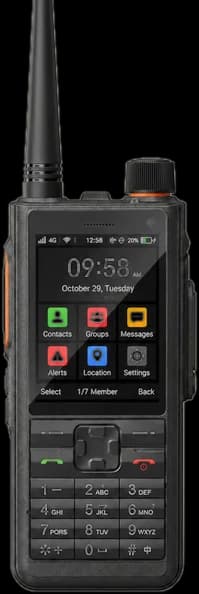
It runs Android 8.1 on a quad-core processor with a 2.4-inch touchscreen, so it is a real computing device rather than a radio with a menu. It takes photos and video, reports GPS and BeiDou position, connects over Wi-Fi and Bluetooth, and runs apps. A supervisor can document an incident on the same device the report came in on.

This is the radio for large resorts and campuses, for security operations that need both wide-area and on-site channels, and for any property migrating off a legacy analog fleet gradually rather than replacing everything in one purchase order.

What changes on your property

  • One device replaces three — cellular, DMR digital, and analog in a single handheld
  • Dual-watch monitors two networks at once, so nothing is missed while switching
  • Keeps talking to the analog radios you already own, so the old fleet is not stranded
  • Digital encrypted voice on DMR for traffic that should stay private
  • Cameras and GPS on board — document an incident on the device that reported it
  • Android 8.1 with a touchscreen, Wi-Fi, and Bluetooth — it runs apps, not just channels
Who it's for

Operations that outgrew one network.

Large resorts and campuses

Wide-area cellular for the teams that roam, digital on-site for the teams that do not.

Security operations

Encrypted digital traffic on site, plus cellular reach for supervisors covering the whole footprint.

Mixed legacy fleets

Properties migrating off analog gradually. The MAX still talks to the radios already in the cabinet.

Supervisors and leads

The people who currently carry two radios and a phone, and would rather carry one thing.

Specifications

The full sheet.

Device

Operating system
Android 8.1
Processor
Qualcomm MSM8909 quad-core 1.1 GHz
Memory
2 GB RAM, 16 GB storage, microSD to 128 GB
Display
2.4-inch capacitive touchscreen, 240 × 320
Cameras
8 MP rear, 2 MP front
Battery
2,800 mAh, 7.6 V
Standby
100 h on PoC · 40 h on DMR and analog · 30 h dual standby
Charging
12 V 2 A charger base
Keypad
P+R numeric keypad, volume knob

Cellular

GSM
B3 / B8
WCDMA
B1 / B5 / B8
FDD-LTE
B1 / B3 / B5 / B7 / B8 / B20
TDD-LTE
B34 / B38 / B39 / B40 / B41
Data rate
FDD 150 Mbps down / 50 Mbps up · TDD 130 Mbps down / 30 Mbps up

Radio

Bands
UHF 400–470 MHz, UHF 350–390 MHz, VHF 136–174 MHz
Channels
1024, 12.5 kHz spacing
Modulation
DMR 4FSK · analog FM
Access
2-slot TDMA, 9.6 kbps
Standard
ETSI-TS102 361-1, -2, -3
Transmit power
5 W high / 1 W low, UHF
Antenna impedance
50 Ω
Operating modes
RMO and DMO
Encryption
Digital encrypted voice

Positioning and connectivity

Positioning
GPS and BeiDou
Bluetooth
4.2 BR/EDR + BLE
Wi-Fi
802.11 a/b/g/n

Environmental

Operating temperature
−20 °C to +55 °C
Humidity
10% to 95% RH, non-condensing
Hardware
Earpiece jack, flashlight, three-colour indicator, vibration motor
Before you order

Questions worth asking.

What do the three networks actually do?

Push-to-Talk over Cellular (PoC) sends your voice over the cellular network, so reach follows cellular rather than line-of-sight. DMR is digital two-way radio — clearer audio than analog, more users on the same channel, and encrypted voice, all without any network at all. Analog is the traditional mode, and it is there so the radio can still talk to older handhelds you already own. You choose per channel, and the radio can watch two at once.

Can it talk to the analog radios we already have?

Yes — that is a large part of the point. Set it to an analog channel matching your existing fleet and it joins that conversation. It means you can introduce these gradually, to supervisors first, without replacing every radio on the property at once.

Why does a radio need Android and cameras?

Because most incidents end in paperwork. When the report comes in over the radio, the person holding it can photograph the damage, drop a GPS location on it, and send it — on the same device, while still standing there. It also means the radio can run software, which is where we are taking this product.

Is this overkill if we only work in one building?

Probably, and we will tell you so. If everything happens under one roof and nothing needs encrypting, the E2WTGA2 at $139 does that job. The MAX earns its price when you genuinely need more than one network — call us and we will size it to the property honestly.

How long before our team is actually using them?

They arrive programmed to your channels and groups, so the first shift is the one you hand them out on. For a mixed property we will usually get on a call first to map which teams need to reach which — that conversation takes about twenty minutes and saves reprogramming later.

CH 13Outfitting a property?

Let us size it with you before you order.

Mixed fleets take a conversation. Tell us what you already own, how your property is laid out, and which teams need to reach each other — and we will tell you how many of these you actually need, and where the cheaper models do the job just as well.